

Introduction
The biggest challenge oil and gas companies face in addressing digital changes in the industry is equipping their people with a common base of understanding of digital. Without a common base of definitions, terminology, and frameworks, organizations run the risk that their digital agenda will be defined by specific vendors which can have unintended consequences. Suppliers of technology, IT professionals, universities and consultants all use variants of their own proprietary approaches to digital that, well intentioned, can create poor transparency, bias and prejudice. Without a common base, teams drift into silos, management blocks innovation and Boards cannot execute their oversight role.
Leveraging the book ‘Bits, Bytes, and Barrels: The Digital Transformation of Oil and Gas’, this training course is a digital awareness education course specific to the oil and gas industry. Suitable for supervisors, managers, leaders and digital delivery teams, technology companies, field services, and equipment providers, this course is applicable to a broad range of the oil and gas industry and the nature of digital innovations that are most important. The course includes key delivery topics like the nature of digital impacts and timing, risks that must be managed, the business case for change, the role of new methods like agile in driving success, organizing a digital team, the impacts on people, and how to set roadmaps.
Why Digital Technologies are Key to oil and gas
Digital innovations are expected to impact the oil and gas along four vectors: growing supplies, lowering costs, raising productivity and altering demand.
- Digital innovations applied to resource evaluations and reserves analysis are expected to grow global reserves by 5% or 500b boe, worth $22 trillion.
- Digital innovations will reduce costs by 20% across the entire supply chain.
- Digital innovations will improve productivity of assets by 20%.
- Digital innovations may erode demand for transportation fuels by 50% by 2040.
Digital technologies are now making an impact on the oil and gas industry, but when will these technologies be fully deployed? What will be the impacts? Which technologies will have the greatest impact? How big will the impact be? How will these technologies be best implemented? How can companies, suppliers, regulators and employees prepare for these changes? What does this mean for your oil and Gas career?
The combination of COVID19 and the pressures to reduce fossil fuel emissions is creating great pressure on the industry to modernize as much and as fast as possible. Digital tools are among the few remaining ways that the industry can improve costs, productivity and climate impacts with one stroke.
This course (Version 3.0) is the on-line version of the two-day in-person seminar offered by the course instructor to oil companies and services companies around the world. Described as “the definitive guide to preparing your career for digital in Oil and Gas”, “Digital Oil and Gas” is a one-stop place to learn about digital in the industry.
Participants learn the terminology and backstory to digital innovation in the industry, a framework for thinking about digital technologies, the maturity and impact of leading technologies, and the likely opportunities in upstream, midstream and downstream.
The course is based on the bestselling book, ‘Bits, Bytes, and Barrels: The Digital Transformation of Oil and Gas’, available on Amazon, Audible, iTunes and many other on-line book shops.
Objectives
- Learn the key definitions of digital terminology
- Understand the leading digital technologies impacting oil and gas
- Assess the pace and nature of impacts of digital technologies on oil and gas
- Grasp the management challenges of adopting digital innovations in oil and gas
- Learn how to build a digital strategy
At the end of the course, a live webinar will be held to address any remaining questions or to discuss any concerns regarding the course.
The course is laid out around a fictitious oil and gas services company that sells a traditional but valuable solution to the oil and gas industry. The company and its products are not very digital, and the company is under competitive threat to its market. Students are presented the basic concepts of digital technology, and learn to apply them to the case company.
This course is designed to help oil and gas industry professionals raise their digital acumen to help unlock the demand for digital innovation.
Part 1 – What is Digital?
- – Digital definitions, terminology and illustrations
- – Key drivers of digital innovation
- – A framework for structuring digital innovations in context
- – The leading digital technologies and their emerging oil and gas use cases
- – Case examples of specific combinatorial digital innovations and impacts
Part 2 – The Impacts of Digital on industry segments
- – Key orthodoxies of the industry that digital transforms
- – Reviews of the impacts of digital innovation on segments of the industry
Part 3 – Management Challenges
- – Organising a team to tackle digital transformation
- – Digital risks to be managed
- – Talent management and skills required
- – Addressing the challenges of change management
Part 4 – Moving Forward
- – The business case for digital innovation
- – Strategic planning methods for approaching digital innovations
Detailed Curriculum Contents
Digital definitions
- – Digital defined, from the International Energy Agency, Cisco, IBM
- – The growth of data
- – Power of analytics
- – Expanding telecommunications
- – Moore’s law
- – Metcalfe’s law
- – Market capitalization of digital companies
- – Convergence
- – Framework for digital innovation
Data
- – Importance of data to digital
- – Data types
- – Oil and gas issues with data
Internet of things
- – Use cases
- – Architectures
- – SCADA and IoT
- – Developments
Artificial intelligence
- – Definitions – AI, ML, deep learning
- – Role of AI in the future
- – Use cases in oil and gas – maintenance, field operations, optimization
Automation
- – Robots in the field and office
- – 3D printing and impacts on oil and gas
- – Use cases – submersible, inspections, surveillance, data collection
Cloud computing
- – Types of clouds – private, hybrid
- – Role of cloud computing
- – Impacts of cloud computing on oil and gas business models
Blockchain
- – Definitions, examples
- – ATOMIC – asset, trust, ownership, money, identity, contract
- – Role of blockchain in oil and gas
- – Use cases – VAKT, tracking, carbon
- – Business issues and digital solutions in the oil and gas value chain
The Oil and Gas Industry Process Model
- – Upstream – conventional, unconventional, on-shore, off-shore
- – Midstream – processing, pipelines, transportation
- – Downstream – refining, wholesaling, retail
- – Capital projects – planning, execution
- – Turnarounds and shutdowns
- – Functions (HR, supply chain, finance)
- – Services – field services and support
Management issues in digital
- – IT, OT and digital team design
- – Risks to be managed – cyber, security, data, policy, technology
- – The Risk Matrix for Digital
- – Management of change process and implementing digital change
- – Agile versus waterfall methods
- – Importance of user experience and design
Talent issues in digital
- – Availability of talent
- – Creating trust in digital
- – Leadership of human change
- – Talent attributes of the future
- – Managing change
Digital strategy
- – Setting a north star heading for digital innovation
- – Confronting industry norms and practices that digital can impact
- – The Strategy Cascade by Roger Martin
- – Examples of digitally driven strategy – Rio Tinto
- – Determining the business case for digital
Geoffrey Cann
Geoffrey Cann is a Brand Ambassador for digital companies in the energy industry. He is an international author, former consultant, and professionally trained speaker. Following an early career with Imperial Oil, he joined Deloitte, where he carried out several hundred consulting assignments around the world, including Canada, the US, Australia, the Caribbean, Korea, Japan, Hong Kong and China. During that time he led a number of businesses, services and industry programs.
Today, he specialises in digital innovation in the energy industry, and produces a weekly article, newsletter, and podcast on digital issues in energy. As a Brand Ambassador he provides marketing support for companies that sell digital innovations to the industry. He published his first book, Bits, Bytes and Barrels: The Digital Transformation of Oil and Gas, in January 2019. He is also a contributing author for Machine Learning and Data Science in the Oil and Gas Industry: Best Practices, Tools and Case Studies, released in March 2021. His third book, Carbon, Capital, and the Cloud: A Playbook for Digital Oil and Gas, was published in March of 2022.
Geoffrey is an advisor to several digital technology companies in such areas as artificial intelligence, blockchain, cloud computing, robotics and the internet of things, and an advisor to the Dean of Energy at the MacPhail School of Energy in Calgary.
From this rich background, Geoffrey brings an economist’s understanding of the ebbs and flows of the energy industry, and a technician’s understanding of the technologies at play in the transformation of the economy. Geoffrey has been trained as a professional speaker which helps him bring these subjects to life.
Geoffrey’s weekly article is under the banner ‘Digital Oil and Gas’ on Substack, and his weekly podcast is called ‘Digital Innovations in Oil and Gas’. It is distributed to a number of services, including iTunes, Amazon, and YouTube.
He holds a Bachelor of Commerce degree (with distinction) from McGill University, and an MBA from the Ivey School of Business.
Important Links:
Newsletter: https://dashboard.mailerlite.com/forms/396374/85202597983553461/share
YouTube channel: https://youtube.com/c/geoffreycann-digital
Amazon podcast: https://music.amazon.ca/podcasts/34d122bf-198e-4dbd-9a08-280951ee2fef/Digital-Oil-and-Gas
ITunes podcast: https://podcasts.apple.com/ca/podcast/digital-oil-and-gas/id1196314462
Spotify podcast: https://open.spotify.com/show/2Yr7qXy2Wd27zRe59rR1tj?si=WkByyhq4Tgqgi1edzVhBcA
Show: https://digitaloilgas.libsyn.com
Facebook work: https://www.facebook.com/digitaloilandgas/
Facebook personal: https://www.facebook.com/geoffrey.cann.7
Website: https://geoffreycann.com/contact
Instagram: https://www.instagram.com/canngeoffrey/
Twitter: @geoffreycann
TikTok: https://www.tiktok.com/@geoffrey_cann
LinkedIn: https://www.linkedin.com/in/advocate-digital-innovation-for-energy/
downloadable business card: https://ovou.me/geoffrey_cann
The course is delivered online through our easy-to-use Virtual Campus platform. For this course, a variety of content is provided including:
– eLearning materials
– Videos
– Interactive multimedia content
– Live webinar classes
– Texts and technical articles
– Case studies
– Assignments and evaluation exercises
Students can download the materials and work through the course at their own pace.
We regularly update this course to ensure the latest news and state-of-the-art developments are covered, and your knowledge of the subject is current.
Live webinars form part of our course delivery. These allow students and tutors to go through the course materials, exchange ideas and knowledge, and solve problems together in a virtual classroom setting. Students can also make use of the platform’s forum, a meeting point to interact with tutors and other students.
The tutoring system is managed by email. Students can email the tutor with any questions about the course and the tutor will be happy to help.
This course is designed for two audiences:
- – Oil and gas industry professionals aiming to raise their digital acumen about the opportunities and the threats posed by digital innovations
- – Technology industry professionals seeking to understand the oil and gas industry and the potential opportunities for digital innovation
Companies who will find the course of value include:
- – Oil and gas companies, particularly integrated companies
- – Companies in the upstream, midstream, and downstream
- – Field services companies that provide services to the industry
- – Managers and supervisors in oil and gas
- – Teams of workers tasked with addressing digital innovations
- – Consultants to the industry
- – Software providers to the industry (cloud, engineering, ERP)
- – Suppliers to the industry (telecoms, IoT, SCADA, EPC)
- – Investors, financiers, government agencies
- – Regulators, policy makers
Once a student finishes the course and successfully completes the assignments and evaluation tests, they are sent an accreditation certificate. The certificate is issued by Ingeoexpert to verify that the student has passed the course. It is a digital certificate that is unique and tamper-proof – it is protected by Blockchain technology. This means it is possible for anyone to check that it is an authentic, original document.
This course equips professionals with the digital acumen needed to drive innovation in oil and gas—a critical skills gap in the industry. By developing a solid foundation in digital terminology, frameworks, and key technologies like AI, IoT, cloud computing, and automation, participants position themselves for roles that are increasingly in demand, such as:
- Digital Transformation Leaders – Lead department and company-wide digital initiatives to improve efficiency, productivity, and cost management.
- Digital Strategy Consultants – Advise oil and gas firms on implementing digital technologies to remain competitive.
- Operations Managers with Digital Expertise – Leverage digital solutions to streamline upstream, midstream, or downstream operations.
- Technology Adoption Specialists – Learn the language of the industry and how technology can benefit oil and gas companies.
- Data Analysts or Digital Innovation Managers – Exploit data and analytics to drive better decision-making and operational results.
For participants working in technology or consulting firms, this course enhances their ability to:
- – Understand oil and gas challenges and tailor solutions that resonate with industry stakeholders.
- – Engage with decision-makers using industry-relevant language and case studies.
Students of this course are better equipped to drive digital transformation, a capability that is both valuable and marketable across oil and gas companies, technology vendors, field services, and consulting firms.
Introduction
The biggest challenge oil and gas companies face in addressing digital changes in the industry is equipping their people with a common base of understanding of digital. Without a common base of definitions, terminology, and frameworks, organizations run the risk that their digital agenda will be defined by specific vendors which can have unintended consequences. Suppliers of technology, IT professionals, universities and consultants all use variants of their own proprietary approaches to digital that, well intentioned, can create poor transparency, bias and prejudice. Without a common base, teams drift into silos, management blocks innovation and Boards cannot execute their oversight role.
Leveraging the book ‘Bits, Bytes, and Barrels: The Digital Transformation of Oil and Gas’, this training course is a digital awareness education course specific to the oil and gas industry. Suitable for supervisors, managers, leaders and digital delivery teams, technology companies, field services, and equipment providers, this course is applicable to a broad range of the oil and gas industry and the nature of digital innovations that are most important. The course includes key delivery topics like the nature of digital impacts and timing, risks that must be managed, the business case for change, the role of new methods like agile in driving success, organizing a digital team, the impacts on people, and how to set roadmaps.
Why Digital Technologies are Key to oil and gas
Digital innovations are expected to impact the oil and gas along four vectors: growing supplies, lowering costs, raising productivity and altering demand.
- Digital innovations applied to resource evaluations and reserves analysis are expected to grow global reserves by 5% or 500b boe, worth $22 trillion.
- Digital innovations will reduce costs by 20% across the entire supply chain.
- Digital innovations will improve productivity of assets by 20%.
- Digital innovations may erode demand for transportation fuels by 50% by 2040.
Digital technologies are now making an impact on the oil and gas industry, but when will these technologies be fully deployed? What will be the impacts? Which technologies will have the greatest impact? How big will the impact be? How will these technologies be best implemented? How can companies, suppliers, regulators and employees prepare for these changes? What does this mean for your oil and Gas career?
The combination of COVID19 and the pressures to reduce fossil fuel emissions is creating great pressure on the industry to modernize as much and as fast as possible. Digital tools are among the few remaining ways that the industry can improve costs, productivity and climate impacts with one stroke.
This course (Version 3.0) is the on-line version of the two-day in-person seminar offered by the course instructor to oil companies and services companies around the world. Described as “the definitive guide to preparing your career for digital in Oil and Gas”, “Digital Oil and Gas” is a one-stop place to learn about digital in the industry.
Participants learn the terminology and backstory to digital innovation in the industry, a framework for thinking about digital technologies, the maturity and impact of leading technologies, and the likely opportunities in upstream, midstream and downstream.
The course is based on the bestselling book, ‘Bits, Bytes, and Barrels: The Digital Transformation of Oil and Gas’, available on Amazon, Audible, iTunes and many other on-line book shops.
Objectives
- Learn the key definitions of digital terminology
- Understand the leading digital technologies impacting oil and gas
- Assess the pace and nature of impacts of digital technologies on oil and gas
- Grasp the management challenges of adopting digital innovations in oil and gas
- Learn how to build a digital strategy
At the end of the course, a live webinar will be held to address any remaining questions or to discuss any concerns regarding the course.
The course is laid out around a fictitious oil and gas services company that sells a traditional but valuable solution to the oil and gas industry. The company and its products are not very digital, and the company is under competitive threat to its market. Students are presented the basic concepts of digital technology, and learn to apply them to the case company.
This course is designed to help oil and gas industry professionals raise their digital acumen to help unlock the demand for digital innovation.
Part 1 – What is Digital?
- – Digital definitions, terminology and illustrations
- – Key drivers of digital innovation
- – A framework for structuring digital innovations in context
- – The leading digital technologies and their emerging oil and gas use cases
- – Case examples of specific combinatorial digital innovations and impacts
Part 2 – The Impacts of Digital on industry segments
- – Key orthodoxies of the industry that digital transforms
- – Reviews of the impacts of digital innovation on segments of the industry
Part 3 – Management Challenges
- – Organising a team to tackle digital transformation
- – Digital risks to be managed
- – Talent management and skills required
- – Addressing the challenges of change management
Part 4 – Moving Forward
- – The business case for digital innovation
- – Strategic planning methods for approaching digital innovations
Detailed Curriculum Contents
Digital definitions
- – Digital defined, from the International Energy Agency, Cisco, IBM
- – The growth of data
- – Power of analytics
- – Expanding telecommunications
- – Moore’s law
- – Metcalfe’s law
- – Market capitalization of digital companies
- – Convergence
- – Framework for digital innovation
Data
- – Importance of data to digital
- – Data types
- – Oil and gas issues with data
Internet of things
- – Use cases
- – Architectures
- – SCADA and IoT
- – Developments
Artificial intelligence
- – Definitions – AI, ML, deep learning
- – Role of AI in the future
- – Use cases in oil and gas – maintenance, field operations, optimization
Automation
- – Robots in the field and office
- – 3D printing and impacts on oil and gas
- – Use cases – submersible, inspections, surveillance, data collection
Cloud computing
- – Types of clouds – private, hybrid
- – Role of cloud computing
- – Impacts of cloud computing on oil and gas business models
Blockchain
- – Definitions, examples
- – ATOMIC – asset, trust, ownership, money, identity, contract
- – Role of blockchain in oil and gas
- – Use cases – VAKT, tracking, carbon
- – Business issues and digital solutions in the oil and gas value chain
The Oil and Gas Industry Process Model
- – Upstream – conventional, unconventional, on-shore, off-shore
- – Midstream – processing, pipelines, transportation
- – Downstream – refining, wholesaling, retail
- – Capital projects – planning, execution
- – Turnarounds and shutdowns
- – Functions (HR, supply chain, finance)
- – Services – field services and support
Management issues in digital
- – IT, OT and digital team design
- – Risks to be managed – cyber, security, data, policy, technology
- – The Risk Matrix for Digital
- – Management of change process and implementing digital change
- – Agile versus waterfall methods
- – Importance of user experience and design
Talent issues in digital
- – Availability of talent
- – Creating trust in digital
- – Leadership of human change
- – Talent attributes of the future
- – Managing change
Digital strategy
- – Setting a north star heading for digital innovation
- – Confronting industry norms and practices that digital can impact
- – The Strategy Cascade by Roger Martin
- – Examples of digitally driven strategy – Rio Tinto
- – Determining the business case for digital
Geoffrey Cann
Geoffrey Cann is a Brand Ambassador for digital companies in the energy industry. He is an international author, former consultant, and professionally trained speaker. Following an early career with Imperial Oil, he joined Deloitte, where he carried out several hundred consulting assignments around the world, including Canada, the US, Australia, the Caribbean, Korea, Japan, Hong Kong and China. During that time he led a number of businesses, services and industry programs.
Today, he specialises in digital innovation in the energy industry, and produces a weekly article, newsletter, and podcast on digital issues in energy. As a Brand Ambassador he provides marketing support for companies that sell digital innovations to the industry. He published his first book, Bits, Bytes and Barrels: The Digital Transformation of Oil and Gas, in January 2019. He is also a contributing author for Machine Learning and Data Science in the Oil and Gas Industry: Best Practices, Tools and Case Studies, released in March 2021. His third book, Carbon, Capital, and the Cloud: A Playbook for Digital Oil and Gas, was published in March of 2022.
Geoffrey is an advisor to several digital technology companies in such areas as artificial intelligence, blockchain, cloud computing, robotics and the internet of things, and an advisor to the Dean of Energy at the MacPhail School of Energy in Calgary.
From this rich background, Geoffrey brings an economist’s understanding of the ebbs and flows of the energy industry, and a technician’s understanding of the technologies at play in the transformation of the economy. Geoffrey has been trained as a professional speaker which helps him bring these subjects to life.
Geoffrey’s weekly article is under the banner ‘Digital Oil and Gas’ on Substack, and his weekly podcast is called ‘Digital Innovations in Oil and Gas’. It is distributed to a number of services, including iTunes, Amazon, and YouTube.
He holds a Bachelor of Commerce degree (with distinction) from McGill University, and an MBA from the Ivey School of Business.
Important Links:
Newsletter: https://dashboard.mailerlite.com/forms/396374/85202597983553461/share
YouTube channel: https://youtube.com/c/geoffreycann-digital
Amazon podcast: https://music.amazon.ca/podcasts/34d122bf-198e-4dbd-9a08-280951ee2fef/Digital-Oil-and-Gas
ITunes podcast: https://podcasts.apple.com/ca/podcast/digital-oil-and-gas/id1196314462
Spotify podcast: https://open.spotify.com/show/2Yr7qXy2Wd27zRe59rR1tj?si=WkByyhq4Tgqgi1edzVhBcA
Show: https://digitaloilgas.libsyn.com
Facebook work: https://www.facebook.com/digitaloilandgas/
Facebook personal: https://www.facebook.com/geoffrey.cann.7
Website: https://geoffreycann.com/contact
Instagram: https://www.instagram.com/canngeoffrey/
Twitter: @geoffreycann
TikTok: https://www.tiktok.com/@geoffrey_cann
LinkedIn: https://www.linkedin.com/in/advocate-digital-innovation-for-energy/
downloadable business card: https://ovou.me/geoffrey_cann
The course is delivered online through our easy-to-use Virtual Campus platform. For this course, a variety of content is provided including:
– eLearning materials
– Videos
– Interactive multimedia content
– Live webinar classes
– Texts and technical articles
– Case studies
– Assignments and evaluation exercises
Students can download the materials and work through the course at their own pace.
We regularly update this course to ensure the latest news and state-of-the-art developments are covered, and your knowledge of the subject is current.
Live webinars form part of our course delivery. These allow students and tutors to go through the course materials, exchange ideas and knowledge, and solve problems together in a virtual classroom setting. Students can also make use of the platform’s forum, a meeting point to interact with tutors and other students.
The tutoring system is managed by email. Students can email the tutor with any questions about the course and the tutor will be happy to help.
This course is designed for two audiences:
- – Oil and gas industry professionals aiming to raise their digital acumen about the opportunities and the threats posed by digital innovations
- – Technology industry professionals seeking to understand the oil and gas industry and the potential opportunities for digital innovation
Companies who will find the course of value include:
- – Oil and gas companies, particularly integrated companies
- – Companies in the upstream, midstream, and downstream
- – Field services companies that provide services to the industry
- – Managers and supervisors in oil and gas
- – Teams of workers tasked with addressing digital innovations
- – Consultants to the industry
- – Software providers to the industry (cloud, engineering, ERP)
- – Suppliers to the industry (telecoms, IoT, SCADA, EPC)
- – Investors, financiers, government agencies
- – Regulators, policy makers
Once a student finishes the course and successfully completes the assignments and evaluation tests, they are sent an accreditation certificate. The certificate is issued by Ingeoexpert to verify that the student has passed the course. It is a digital certificate that is unique and tamper-proof – it is protected by Blockchain technology. This means it is possible for anyone to check that it is an authentic, original document.
This course equips professionals with the digital acumen needed to drive innovation in oil and gas—a critical skills gap in the industry. By developing a solid foundation in digital terminology, frameworks, and key technologies like AI, IoT, cloud computing, and automation, participants position themselves for roles that are increasingly in demand, such as:
- Digital Transformation Leaders – Lead department and company-wide digital initiatives to improve efficiency, productivity, and cost management.
- Digital Strategy Consultants – Advise oil and gas firms on implementing digital technologies to remain competitive.
- Operations Managers with Digital Expertise – Leverage digital solutions to streamline upstream, midstream, or downstream operations.
- Technology Adoption Specialists – Learn the language of the industry and how technology can benefit oil and gas companies.
- Data Analysts or Digital Innovation Managers – Exploit data and analytics to drive better decision-making and operational results.
For participants working in technology or consulting firms, this course enhances their ability to:
- – Understand oil and gas challenges and tailor solutions that resonate with industry stakeholders.
- – Engage with decision-makers using industry-relevant language and case studies.
Students of this course are better equipped to drive digital transformation, a capability that is both valuable and marketable across oil and gas companies, technology vendors, field services, and consulting firms.
More info
Finish this course and get a certificate based on Blockchain
Digital Oil and Gas
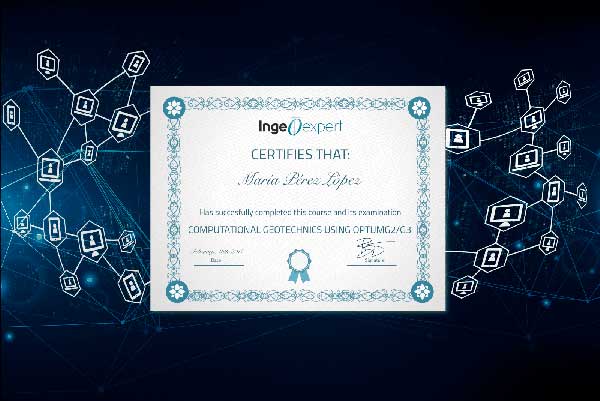
Blockchain technology makes the certificate incorruptible, enabling companies to verifiy its autenticity.
Reviews
There are no reviews yet.